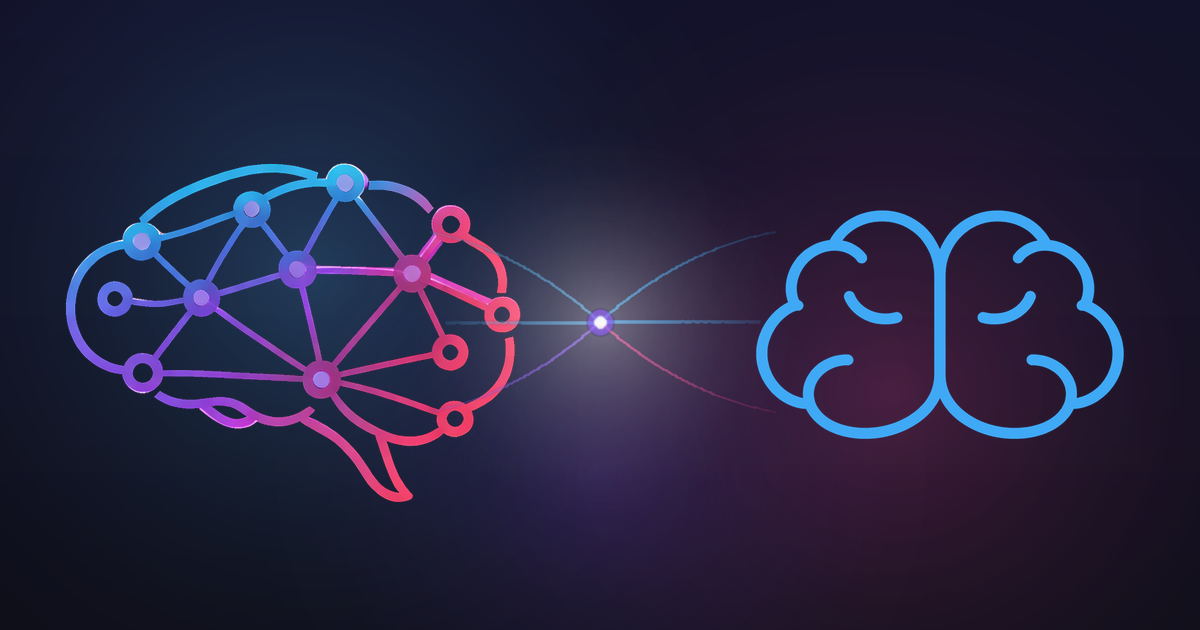
People often ask where startup ideas come from.
They imagine someone waking up one morning with a brilliant idea.
My experience has been almost the opposite.
The best opportunities seem to happen when you're deeply focused on solving a problem you're genuinely interested in, without knowing exactly where it'll lead.
After building NeuralGraph, I found myself with an interesting problem.
I had built the engine.
NeuralGraph was a scalable memory platform that could plug into any LLM, retrieve relevant memories, and make AI conversations feel more natural.
Technically...
It worked.
But it was only a backend.
I had built a powerful system, but I didn't yet have an application that people would actually pay for.
I had a solution.
I just didn't know what the problem was.
A few weeks later, my wife and I drove to Santa Barbara for Valentine's Day.
On the way, we got hungry and decided to stop in Pasadena to grab lunch with our good friends.
Sometimes the biggest moments in your career start with something completely ordinary.
During lunch, I showed my friend Aaron a prototype of NeuralGraph.
I gave him a quick demo and explained how graph-based memory could make AI feel like it actually knew you.
Afterward, my wife laughed and said,
"Aaron's jaw was on the floor the entire time."
When I finished, Aaron smiled and said,
"I want to show you something."
He pulled out a project he had been building.
It was called MiniMinds.
As he walked me through it, something started happening in my head.
At first, I was just impressed by what he had built.
Then I started mentally plugging NeuralGraph into different parts of the application.
"That feature could use long-term memory."
"This conversation would be dramatically better if it actually remembered you."
"That recommendation system... graphs would fit perfectly there."
The more we talked, the more obvious it became.
I hadn't built an application looking for a backend.
I had built a backend looking for an application.
At the same time, Aaron had built an application that was missing exactly the piece I had spent months building.
Neither of us planned it.
We had been building independently, solving different problems, completely unaware that our work was converging toward the same destination.
By the end of lunch, it was obvious.
NeuralGraph wasn't just compatible with MiniMinds.
It completed it.
And for the first time, NeuralGraph had the application it had been waiting for.
MiniMinds became the first real application powered by NeuralGraph.
That lunch became the beginning of a partnership.
Together, we rebuilt MiniMinds from the ground up.
We integrated NeuralGraph as its memory engine.
We redesigned the architecture to scale.
We built native iOS and Android apps.
We built the web platform.
Today, MiniMinds is no longer just an idea.
It's a platform we're incredibly excited about.
Looking back, I don't think the lesson is to wait for serendipity.
The lesson is to prepare for it.
If I hadn't spent months building NeuralGraph before there was an obvious application...
...that conversation would've ended after lunch.
If Aaron hadn't spent months building MiniMinds...
...there would've been no perfect place for NeuralGraph to live.
Opportunity is often just preparation meeting the right conversation.
Sometimes your next startup isn't hiding in a brainstorming session.
Sometimes it's waiting across the table from a friend.
And sometimes...
that's serendipity.
← Back to all posts